
Damian Collins, Chairman of Westbridge Funds Management, discusses a key opportunity unfolding in the commercial property market and how Westbridge is responding.
While the acceleration of e-commerce has reshaped shopping behaviours and challenged certain retail models, others are offering increasingly compelling opportunities for fund managers and investors.
The Large Format Retail (LFR) sector, in particular, is a sub-market we’ve been keeping a close eye on at Westbridge, with its unique model and demand dynamics signalling promising prospects for the years ahead.
At Westbridge, we believe the outlook for the LFR sector is strong. With favourable fundamentals and high tenant demand, commercial retail property assets can offer a compelling proposition for those looking to diversify their investment portfolio and capture both income and capital growth.
Here’s why we believe this sector presents attractive opportunities for investment.
But first, what is Large Format Retail?
Large Format Retail refers to retail stores that occupy extensive floor space, often as standalone buildings or part of larger complexes.
These stores typically specialise in bulky goods such as furniture, pet supplies and home appliances, and are often characterised by “big box” retailers such as JB HiFi, Harvey Norman, The Good Guys and Spotlight.
Large Format Retail centres are those retail precincts where a number of these “big box” stores operate from one location, providing a convenient shopping experience for consumers while ensuring steady foot traffic for tenants.
Large Format Retail centres typically comprise multiple large tenants within a single precinct, offering customers convenience and ample parking.
From a property investment standpoint, this format provides high visibility and supports consistent foot traffic, longer lease terms, and strong tenant retention.
Strong tenant demand and steady yields
One of the key advantages of the LFR model – and a crucial factor underpinning its appeal over other retail segments – is its cost-effectiveness.
Occupancy costs per square metre are lower than those of enclosed shopping centres, making these assets highly appealing (and more economically viable) for tenants. From an investment perspective, this has important implications for their long-term income resilience.
Many LFR centres are anchored by ASX-listed or blue-chip tenants, which strengthens income stability and makes them appealing to fund managers and investors seeking regular distributions.
The strength of the LFR model from both a tenancy and investment perspective has been highlighted by the sector’s recent rental performance.
While other retail sub-sectors have undergone a resetting of rents to varying degrees over the past four years, JLL research shows that the LFR sector has maintained consistent rental growth since Q4 2020. This growth has accelerated in recent quarters, resulting in an annual rental uplift of 3.5% across 2024 – a trend that is expected to continue.
Tight supply is driving value
While tenant demand remains strong, quality LFR assets has become increasingly constrained.
According to JLL, 2024 marked the lowest level of national Australian supply in their recorded history across all commercial real estate sub-sectors, with the LFR sector remaining near the bottom of the supply spectrum nationally.
While peaking at 5.6% in 2020, the national LFR vacancy rate stood at just 3.3% as of December 2024 (JLL), highlighting the scarcity of available space and resilient demand in this sub-sector.
These supply constraints are being further compounded by rising construction costs, which are making the development of new LFR centres increasingly challenging in the current market.
As a result, existing LFR assets are becoming even more valuable, creating strong investment potential, particularly in locations where appropriately zoned land is already scarce.
For investors, this imbalance presents a clear opportunity. By securing under-rented assets in constrained markets, there’s potential to unlock rental growth through re-leasing and active asset management.

A resilient retail model
Large format retail properties have proven to be highly adaptable in the face of retail disruption.
Unlike internal shopping centres that face direct competition from e-commerce, LFR assets function as both physical storefronts and distribution centres or pick-up points. This dual role enables them to work with, rather than against, online retail, in turn positioning them as a key component of the evolving omnichannel retail environment.
Additionally, LFR assets have the potential to evolve in the long term to support last-mile logistics and e-commerce supply chains, further reinforcing their value proposition in a rapidly changing retail landscape.
Large Format Retail investment – where we see opportunities for investors
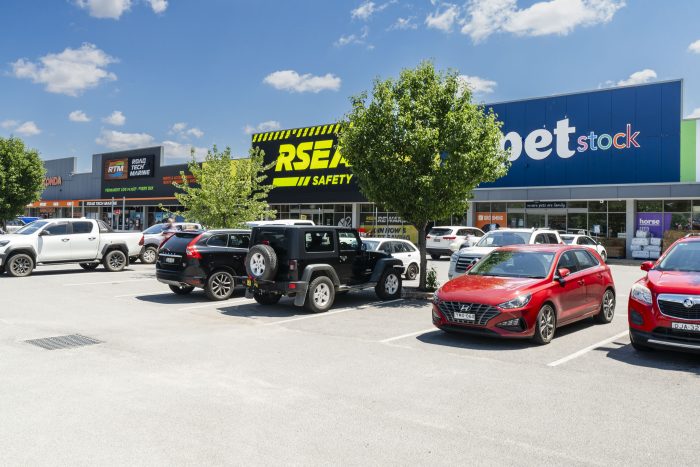
At Westbridge, we recognise the immense potential within the LFR sector and are actively tapping into this for our investors through our managed fund structures.
Given the recent uplift in rental growth, we’re seeing many centres that remain under-rented, providing a unique opportunity to enhance income returns through active asset management.
For example, as part of our Westbridge Retail Centre Fund (Wagga Wagga) acquisition, we estimate that approximately 80% of the leased space is currently rented below market rates, offering value-add potential through strategic lease management and re-negotiation. This approach aligns with our focus on delivering higher investment returns without relying solely on capital appreciation.
In addition, we see substantial opportunities in high-growth regional and metropolitan locations where supply is limited and appropriately zoned land for new LFR developments is scarce.
By strategically targeting these areas, we aim to capitalise on strong market fundamentals and our proactive management approach to deliver long-term value for our investors – placing ourselves at the forefront of the opportunities this sector presents.
Why now?
With tightening supply, national tenants seeking expansion, and yields holding firm, Large Format Retail property investment is outperforming other segments of the commercial market. In a time of uncertainty, it provides a resilient retail model backed by solid fundamentals and long commercial leases.
For wholesale investors seeking diversification across commercial property, LFR offers a form of retail exposure that is aligned with modern retail strategies and remains cost-effective for tenants.
Please find more information on our retail real estate investment opportunities below, or contact our team to schedule a consultation.
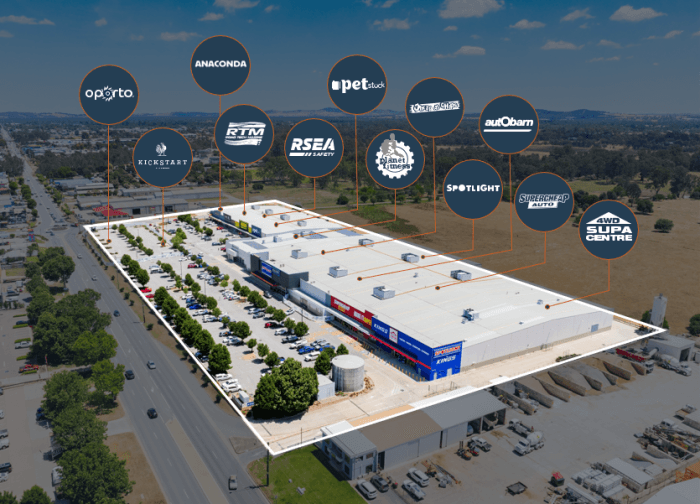
Learn more about commercial property funds, explore our latest opportunities, or speak to our team about how to invest in Large Format Retail property with confidence.
Recommended
How do open ended funds work?
How to get into property development: what are your options?
Closed-end funds vs. open-ended funds: what’s the difference?
Why we’re seeing opportunities in the industrial property sector
Tax-deferred income – a hidden perk of unlisted property funds